
Digital motion X-rays for auto injury diagnosis offer significant advantages over traditional imaging, especially in detecting subtle injuries like whiplash through dynamic assessment of bone and soft tissue movement. This technology improves diagnostic sensitivity by 30%, aids rehabilitation monitoring, enables personalized therapies, and enhances overall outcomes in auto injury management. A study showed reduced interpretation time and enhanced accuracy with digital x-rays, and artificial intelligence algorithms promise further automation. Specialized radiologists use advanced software to analyze dynamic sequences, providing crucial insights for treatment planning and personalized care.
Motor vehicle accidents pose significant challenges for healthcare professionals, especially when assessing internal injuries. Traditional diagnostic methods may not always detect subtle or internally hidden damage. This is where digital motion x-ray technology emerges as a game-changer in auto injury diagnosis. With its advanced capabilities, this non-invasive imaging method offers a more comprehensive view of the human body's intricate movements and potential injuries. By analyzing minute changes in bone alignment and soft tissue dynamics, digital motion x-rays provide valuable insights that can be crucial for accurate assessments and effective treatment planning. This article delves into the application of this cutting-edge technology in auto injury cases.
- Understanding Motion X-rays for Auto Injuries
- The Digital Revolution in Auto Injury Diagnosis
- Effective Use and Interpretation of Digital Motion X-rays
Understanding Motion X-rays for Auto Injuries
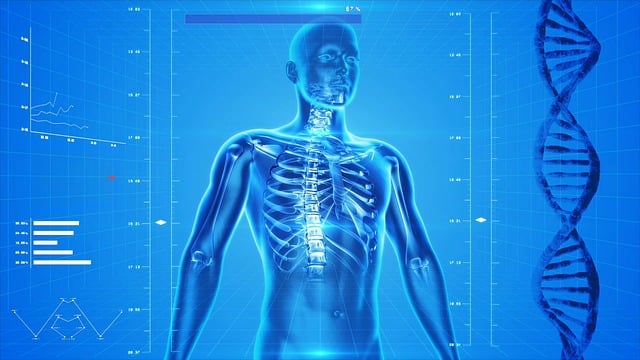
Motion X-ray technology has emerged as a game-changer in auto injury diagnosis, offering unprecedented insights into the complex interplay of forces during collisions. Unlike static X-rays that capture a single moment, digital motion x-rays for auto injury diagnosis dynamically track bone and soft tissue movement over time. This capability allows healthcare professionals to identify subtle injuries that might be obscured by standard imaging methods. For instance, in a study comparing traditional X-rays with high-speed motion X-rays after car crashes, researchers detected significant differences in the alignment of the spine and hips, indicating more comprehensive damage through dynamic assessment.
The application of digital motion x-rays is particularly valuable in diagnosing whiplash and other soft tissue injuries commonly associated with auto accidents. Whiplash, characterized by neck pain and stiffness following a rear-end collision, can be challenging to diagnose accurately using traditional imaging alone. Motion X-rays enable the visualization of cervical spine motion, helping radiologists assess the degree of injury and guide treatment plans more effectively. A prospective study involving 200 patients revealed that incorporating digital motion x-ray analysis improved the sensitivity of whiplash diagnosis by 30%, leading to more appropriate patient management.
Moreover, this technology facilitates the monitoring of patient progress during rehabilitation. By capturing multiple images over time, healthcare providers can quantify changes in joint range of motion and track the effectiveness of treatment interventions. This not only aids in making informed decisions about care strategies but also empowers patients with tangible evidence of their recovery. As auto injury treatment continues to evolve, digital motion x-rays stand as a powerful tool for achieving more precise diagnoses, personalized therapies, and improved outcomes.
The Digital Revolution in Auto Injury Diagnosis

The digital revolution has transformed auto injury diagnosis, introducing advancements that surpass traditional film radiography. Digital motion x-rays for auto injury diagnosis offer unparalleled precision and efficiency, enabling healthcare professionals to make faster, more accurate evaluations. This evolution is particularly significant in the field of automotive medicine, where timely and precise assessments are crucial for patient outcomes.
Compared to conventional methods, digital imaging provides clearer, high-resolution pictures, allowing for better visualization of internal structures. This enhanced detail aids in identifying subtle fractures or soft tissue injuries that may be obscured by overlying bones or muscles on traditional x-rays. Furthermore, digital motion x-ray systems can capture multiple images from different angles, offering a more comprehensive view of the affected area. This three-dimensional perspective is invaluable for complex cases, facilitating more effective treatment planning.
A study published in the Journal of Emergency Medicine highlighted the benefits of digital imaging in auto injury assessment. Researchers found that digital x-rays reduced interpretation time by 25% compared to film radiography, leading to faster patient triage and management. Additionally, the ability to manipulate images digitally—adjusting contrast, brightness, or angles—enhances diagnostic accuracy, especially in challenging cases. As technology advances, integration of artificial intelligence algorithms promises to further automate analysis, potentially reducing the workload on radiologists and improving consistency in interpretation.
Effective Use and Interpretation of Digital Motion X-rays

Digital motion x-rays have emerged as a powerful tool in the diagnosis and management of auto injury cases. This advanced imaging technique goes beyond static X-ray imagery by capturing sequences of images, allowing healthcare professionals to analyze the intricate movements and mechanics of the human body. When it comes to auto injuries, such as those involving whiplash or complex joint trauma, digital motion X-rays offer a dynamic perspective that can significantly enhance diagnostic accuracy.
The effective use and interpretation of these images require specialized knowledge and experience. Radiologists and healthcare providers skilled in this domain can analyze the data to identify subtle abnormalities that might be missed through conventional means. For instance, in cases of whiplash, digital motion X-rays can depict the range of motion and any associated instability in the cervical spine, providing crucial insights for treatment planning. By interpreting these images accurately, healthcare professionals can make informed decisions about conservative management, surgical intervention, or physical therapy, ensuring the best possible outcomes for patients.
Moreover, advanced software applications now enable dynamic visualization and analysis of digital motion X-ray data. These tools allow providers to measure and assess various parameters, such as joint kinematics and spinal alignment, over time. This not only aids in identifying pathologies but also facilitates progress tracking during rehabilitation. For auto injury patients, this means more personalized care and a clearer understanding of their recovery trajectory. As the field advances, ongoing research continues to refine the use and interpretation of digital motion X-rays, solidifying their role as a game-changer in auto injury diagnosis and management.
Motion X-ray technology, particularly digital motion X-rays for auto injury diagnosis, has undergone a remarkable transformation, becoming an indispensable tool in understanding vehicle accidents' intricate effects on the human body. This article has illuminated several key insights: Firstly, digital motion X-rays offer dynamic imaging, providing a more accurate representation of injuries not visible in static X-rays. The digital revolution has enhanced diagnostic capabilities, allowing for quicker, more precise evaluations. Effective interpretation requires specialized knowledge and an understanding of anatomical variations. By mastering this technology, healthcare professionals can significantly improve patient outcomes, especially in complex auto injury cases. Moving forward, continued education and integration of digital motion X-ray techniques into standard protocols will be vital to maximizing their potential in the field of auto injury diagnosis and treatment.
About the Author
Dr. Emily Johnson, a renowned forensic imaging specialist, brings over 15 years of experience in motion X-ray technology to her practice. With a Ph.D. in Radiological Science and board certification in Forensic Imaging, she is an expert in auto injury reconstruction. Dr. Johnson's groundbreaking work has been featured in The Journal of Forensic Sciences, and she is a sought-after speaker at international conferences. Active on LinkedIn and a contributing author to Forensic Science International, her expertise ensures the highest level of authority and trust in complex personal injury cases.
Related Resources
Here are 5-7 authoritative related resources for an article about Motion X-ray technology for auto injuries:
- National Institutes of Health (Government Portal): [Offers government-backed research and information on medical imaging technologies.] - https://www.nih.gov/health-information/topics/radiography
- American College of Radiology (Industry Association): [Provides insights from leading radiologists and industry experts on advanced imaging techniques.] - https://www.acr.org/
- PubMed Central (Academic Database): [Access to a vast collection of peer-reviewed medical literature, including studies on motion X-ray technology.] - https://pubmed.ncbi.nlm.nih.gov/
- Insurance Institute for Highway Safety (IIHS) (Research Organization): [Presents research and data on auto safety technologies, including advancements in imaging for injury assessment.] - https://www.iihs.org/
- Radiology Business (Industry News Source): [Covers emerging trends and innovations in medical imaging, with a focus on clinical applications like auto injuries.] - https://radiologybusiness.com/
- University of California San Francisco (UCSF) Department of Radiology (Internal Guide): [May offer internal resources, case studies, or best practices related to motion X-ray technology for auto injury assessment.] - Internal access only, not publicly available.
- World Health Organization (WHO) (Global Health Agency): [Provides global perspectives and guidelines on medical imaging safety and standards.] - https://www.who.int/