
Digital motion X-rays are transforming auto injury diagnosis by revealing dynamic spinal insights missed by static imaging. This non-invasive technology captures high-resolution images over time, enabling healthcare providers to detect subtle misalignments and fractures, leading to faster treatment and potentially better patient outcomes. By visualizing spinal movement and deformation, digital motion X-rays enhance the management of spine damage from auto accidents, providing crucial data for informed care decisions.
- Real-time imaging: Revolutionizing spine injury detection
- Digital motion X-rays: Unlocking accurate auto injury diagnosis
- Auto injury diagnosis: Enhancing care with advanced technology
Real-time imaging: Revolutionizing spine injury detection
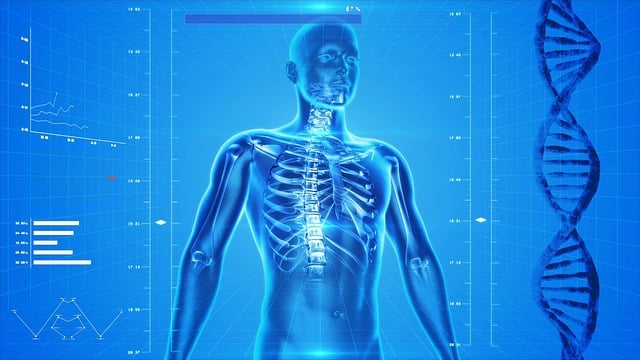
Real-time imaging technologies, such as digital motion X-rays, are revolutionizing spine injury detection and diagnosis. Unlike traditional static X-ray images, digital motion X-rays capture a series of high-resolution images over time, providing dynamic insights into spinal movement and potential injuries that might be missed with conventional methods. This advanced technology allows healthcare professionals to assess spinal stability and identify subtle abnormalities caused by auto accidents or other traumatic events.
By analyzing the differences between consecutive frames, real-time imaging can detect even minor misalignments or fractures that may not be visible in a single static image. This early detection capability is crucial for expediting treatment and improving patient outcomes. Moreover, digital motion X-rays offer a non-invasive approach, reducing the radiation exposure associated with traditional diagnostic procedures, making them a game-changer in spine injury management.
Digital motion X-rays: Unlocking accurate auto injury diagnosis

Digital motion X-rays are transforming the way auto injuries, particularly spine-related trauma, are diagnosed and managed. This cutting-edge technology offers a dynamic and accurate approach to capturing spinal abnormalities in real time, providing healthcare professionals with invaluable insights for immediate care. Unlike traditional static X-rays, digital motion X-rays enable the visualization of spinal movement and deformation, allowing doctors to detect even subtle injuries that might be overlooked through conventional methods.
By analyzing the intricate patterns of spinal motion, these advanced imaging techniques can pinpoint areas of stress, strain, or misalignment. This capability is especially beneficial for auto accident victims, as it facilitates prompt identification of spine injuries such as fractures, dislocations, or ligament tears. With digital motion X-rays, healthcare providers can make more informed decisions, ensuring that patients receive the most effective and timely treatment for their specific spinal trauma.
Auto injury diagnosis: Enhancing care with advanced technology

Auto injury diagnosis has entered a new era with the advent of advanced technology, particularly in the form of digital motion X-rays. These innovative tools offer unprecedented precision and dynamic range in capturing spinal imagery, enabling healthcare professionals to detect even subtle spine injuries that might be overlooked by traditional methods.
By combining high-resolution imaging with real-time data analysis, digital motion X-rays facilitate faster, more accurate auto injury diagnosis. This not only enhances patient care but also streamlines the treatment process, potentially reducing recovery times and improving overall outcomes. The ability to visualize spinal structures in motion provides invaluable insights into the mechanics of injuries, guiding personalized and effective rehabilitation strategies.
Real-time imaging techniques, particularly digital motion X-rays, are transforming spine injury detection and auto injury diagnosis. By providing accurate, dynamic assessments, these technologies empower healthcare professionals to make more informed decisions, ultimately enhancing patient care and outcomes in the automotive industry. The integration of advanced imaging systems like digital motion X-rays is a game-changer, ensuring faster identification and treatment of spine injuries resulting from car accidents.